

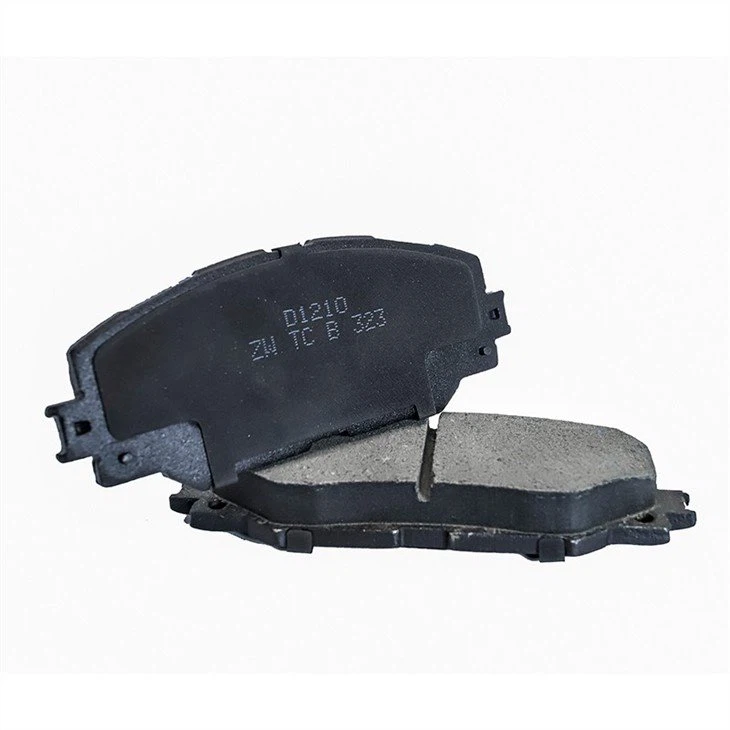
Semi Metallic Brake Pads
The product quality has passed the American LINK laboratory testing and appraisal, complies with the VESC-3 legal standard, and has passed the ISO 16949 quality system certification. We only produce high-quality products.
Description
Why Choose Us?
Strong Production Capacity
The company mainly produces automobile brake pads. It has first-class equipment and advanced production technology and can produce more than 2,200 types of brake pads, with an annual production capacity of 6 million sets.
Product Quality Guaranteed
The product quality has passed the American LINK laboratory testing and appraisal, complies with the VESC-3 legal standard, and has passed the ISO 16949 quality system certification. We only produce high-quality products.
OEM & ODM Available
We can produce and process automobile brake pads according to the sketches or samples provided by customers. We can also provide customers with product parameter reports, quality inspection results and other reports.
One-Stop Service
Responsible for goods quality inspection, customs declaration tracking and other processes, ensuring timely handling of issues in all aspects, timely feedback and processing of product after-sales customer requirements.
Related Products

Our BMW Brake Pads are designed to be easy to install and require no modifications to your vehicle's brake system. They come pre-sorted in sets and are ready to install right out of the box.

Nissan Brake Pads have the option of ceramic material for improved high-temperature performance and wear resistance. The material is low-density, environmentally friendly, and low-noise.

Our Toyota Brake Pads are a standard product. It can have a good fit with your brake pads, so the braking effect is good, the wear is less, and it is safer and more durable.

Our products are not only wear-resistant but also low in noise. They can be applied to various types of cars, helping you achieve safe and stable braking and longer service life.

Ford Brake Pads are generally composed of metal plates, adhesive insulation layers, and friction blocks. Steel plates should be coated to prevent rust.

Its high-temperature resistance features greatly improve its braking performance and ensure driving safety. Our product models are various, you can consult the details.

Minimum Wear Rate Brake Pads have been strictly tested to ensure stable braking performance under different road conditions. It uses low metal formula, so it is more healthy and environmentally friendly.

Our Safety Brake Pads have been specifically designed to reduce the risk of accidents by providing maximum stopping power, even in the most challenging driving conditions.

High Temperature Resistant Brake Pads
The most noteworthy feature of our High Temperature Resistant Brake Pads is its capability to withstand high temperatures. These brake pads can resist heat up to 700℃.
What are Semi Metallic Brake Pads?
Semi metallic brake pads are between 30% and 70% metal, including copper, iron, steel, and other composite alloys. These various metals are combined with graphite lubricant and other fillers to complete the brake pad. The metallic brake pad compounds available vary, each type offering their own advantages for everything from daily commutes to track racing.
- Semi metallic features a strong feel and modulation for OEM brake pad replacement.
- Semi metallic is a long-lasting brake pad and very little rotor wear.
- Semi metallic brake pads will be good in wet and/or dry conditions.
- Semi metallic brake pads are a very versatile brake pad compound for almost every need.
- Semi metallic brake pads are good for touring, performance street, motocross, endure and dual sport.
- GG-rated friction.

Components of Semi Metallic Brake Pads
Friction Block
The friction block contacts the rotors (or brake disc) to slow them down. Friction blocks combine powders, lubricants, fibers, fillers, and abrasives held together by a binder resin. The brake pad material impacts how your brake pads perform, which we'll get to later.
Underlayer
Next is the underlayer, which has more resin to bond the friction block to the backing plate. Some brake pads have a sensor (called a 'squealer') that makes a squealing noise when the brake pads wear down to the underlayer level - alerting you when the friction material is completely worn.
Adhesive
Braking generates a lot of heat. The adhesive has to be highly heat resistant and strong enough to hold the friction block to the backing plate under these frequent, extreme conditions.
Backing Plate
The backing plate is the backbone of the brake pad. It's a steel plate designed to provide even clamping pressure along the friction block when the brake system is engaged.
Shim
The shim helps reduce the noise level and vibration from the backing plate to the brake calipers.
Exceptional Stopping Power: Semi-metallic brake pads are known for their ability to deliver impressive stopping power. They provide strong and consistent braking performance, making them suitable for various driving conditions.
High Heat Tolerance: These brake pads excel in dissipating heat, reducing the risk of brake fade during intense braking situations. This heat resistance is particularly advantageous in performance or heavy-duty vehicles.
Durability and Longevity: Semi-metallic brake pads are designed to be long-lasting. The metal content in these pads results in reduced wear, leading to fewer replacements over time and cost savings.
Versatility: Semi-metallic brake pads are versatile and can perform well in different driving conditions, from city commuting to spirited driving or towing heavy loads.
Reduced Brake Noise: While semi-metallic brake pads may produce more noise compared to ceramic pads, advancements in technology have minimized brake noise, providing a quieter driving experience.
Comparison of Semi Metallic Brake Pads and Others
| Semi Metallic Brake Pads | Organic Brake Pads | Ceramic Brake Pads |
|
|
|
|
|
|
|
|
|
|
|
|
|
|
|
Manufacturing Process of Semi Metallic Brake Pads

Brake Pad Material Development
Prior to production, brake designers will look closely at different suppliers as a source for the raw materials needed to complete the construction of the pad. Along with the price, engineers will carefully examine different characteristics of how these materials will perform when it comes to potential issues with noise, wear-and-tear along with other considerations.
Stamping the Backing Plate
Dimensions are checked before special features such as pins, friction retention devices, and other hardware are applied. Then the backing plate is blasted and washed to remove problematic imperfections that could be leftover following the stamping process. Now the backing plate is primed for adhesive which is the most common method used in the production process.


Mixture Friction Materials
It's at this station where different friction materials are measured and mixed to ensure better overall performance in the future. The components are precisely measured and placed into a mixture to ensure the final result is homogeneous. The mixture is made into "pre-molds" and the resulting "pucks" will be pressed and molded to form the backing plates.
Integral Molding
The plates are placed into a mold and friction material is placed on top. In a press, the friction material is molded to the backing plate using pressure and heat. It forces the material through holes in the plate in order to increase retention. This step is called "integral molding" and is one of the methods used in attaching the friction material.

Module title
Squealing Sound
Many disc brake pads are equipped with a piece of metal called a wear indicator, that when enough of the brake pad has worn down the wear indicator makes contact with the rotor producing a squealing sound.
Pulling
When pads are worn, your car may tend to pull from one side to the other while the brake pedal is being pressed.
Grooves on the Rotor
Some grooves from normal wear and tear can be resurfaced or machined. However, if the indentations are too deep, they will not be able to be machined or thick enough to dissipate heat and will require replacement.
Pulsating
When pressure is applied to the brake pedal and the car shakes or the brake pedal pulsates, brake pads or rotors could be worn.
How To Take Care Of Your Brake Pads
Adjust Your Driving Habits
If extending the life of your brake pads is a priority, slow down a bit, and try to ease into your braking. By getting off the gas early when you see a red light, stop sign, or brake lights up ahead, you can save your brake pads a lot of stress.
Flush Your Brakes Regularly
A good rule of thumb is to bleed and flush your brakes approximately every 2 years. This will help your overall brake system work better, taking some stress off your brake pads, and reduce the risks of internal corrosion that occur when water gets in the brake lines.
Frequent Brake Pad Checks
Brake specialists recommend booking brake inspections every 20,000km or 12 months of driving. However, this recommendation varies based on individual driving habits and conditions.
Causes And Solutions For Uneven Brake Pad Wear
The brake pad comes in contact with more flat spots of the rotor, which consequently causes the brake pad to wear out faster and more unevenly than the rest of the pads in your car. This condition can also arise from a sticking brake caliper, rust, corrosion, and frequent slamming on the brake. Dirt and debris between the rotor and the brake pad may also lead to Disc Thickness Variation.
What can you do about it?
First, you can ask a mechanic to iron out the flat spots. You can also ask them to clean the rotors with a brake cleaner before reinstalling to remove any brake pad dust or rust, as these are the major contributors to brake wear.
A brake caliper contains a piston that exerts pressure on the brake pads to stop the vehicle. Sometimes, the rubber seal that pulls the caliper piston away loses its ability to pull back. This causes the pad to be in constant contact with the brake rotor and results in faster brake pad wear. Sometimes, rust or debris on the caliper can also lead to a sticky piston and guide pins, which means that the piston won't slide efficiently, leading to increased brake pad wear.
What should you do?
When that happens, you should visit an auto repair shop or book a brake service appointment to have an expert look at your brake caliper as well as the guide pins. And, if needed, you can go for a caliper rebuild or brake replacement.
A slide pin allows the brake caliper to slide back and forth so that the brake pads can come in contact with the rotors. When these sliding pins become corroded or if you have a stuck piston, they prevent the caliper from sliding smoothly. As a result, the brake caliper gets stuck in one position causing the brake pad to wear out more quickly.
How to get rid of this corrosion?
A quick solution is to use a wire brush and some grease to get rid of the corrosion. And if the slide pins are beyond repair, it's a good idea to replace them with a new slide pin.
Determining the right brake pad for your car involves considering various factors. Here's a step-by-step guide to help you make an informed decision:
Check Your Vehicle's Owner's Manual
Start by consulting your car's owner's manual. It often provides recommendations or requirements regarding the type of brake pads suitable for your vehicle. The manufacturer's guidelines are a reliable source of information and should be your primary reference.
Consider Your Driving Style
Assess your driving habits and style. Do you drive aggressively or more conservatively? Are you mostly engaged in city driving, or do you frequently encounter hilly terrains or stop-and-go traffic? High-performance brake pads may be suitable for aggressive driving or heavy-duty applications, while standard pads can suffice for everyday commuting.
Evaluate Your Vehicle's Characteristics
Take into account the weight, size, and type of your vehicle. Larger and heavier vehicles, such as SUVs or trucks, may require brake pads with higher friction levels to effectively stop the vehicle's mass. Similarly, if your car has high-performance capabilities or is used for racing, specialized brake pads designed for such applications might be necessary.
Consider Environmental Factors
Think about the climate and weather conditions in your area. Certain brake pads perform better in specific temperature ranges. If you live in an area with extreme heat or cold, consider brake pads that offer good performance under those conditions.
Budget Considerations
Determine your budget for brake pad replacements. Different types of brake pads have varying price ranges. While higher-quality pads might have a higher upfront cost, they can provide better performance, durability, and longer lifespan, potentially saving you money in the long run.
Seek Professional Advice
Consult with a trusted mechanic or brake specialist who can provide expertise and recommend the most suitable brake pads for your vehicle. They can consider your specific driving conditions, vehicle model, and any other relevant factors to guide you toward the optimal choice.
How to Install Brake Pads?
Step 1
Loosen the lug nuts on the front passenger side wheel. Set the jack below the lift guide notches behind the wheel on the frame rail. Raise the jack until the wheel hangs off of the ground. Remove the lug nuts. Pull off the wheel.
Step 2
Spin the steering wheel clockwise to jut the rotor outward to make it easier to reach the inboard side of the caliper.
Step 3
Remove the bolts securing the caliper to the rotor with your socket wrench and ratchet. Pull off the caliper from the rotor.
Step 4
Pull the inboard and outboard brake pads out of the caliper with pliers.
Step 5
Insert the inboard brake pad into the caliper. Grip the caliper with the caliper clamp so that the drive shaft presses the inboard brake into the caliper piston. Tighten the clamp until the inboard brake pad is flush with the caliper. Remove the clamp.
Step 6
Insert the outboard brake pad into the outboard side of the caliper. Seat the pad in the slots of the caliper.
Step 7
Remount the caliper to the rotor. Reinstall the wheel and lower the vehicle.
Step 8
Repeat Steps 1 through 7 for the other wheels.
Tips and Precautions
Following proper installation procedures and precautions will ensure optimal braking performance and safety with your new low metallic brake pads. Consult a shop manual for your vehicle's torque specs if needed.
Always replace pads in axle sets. Do not just replace one side.
Lubricate pad mounting hardware and caliper slides with brake lubricant to prevent sticking.
Do not use compressed air to clean the brake assembly. This can damage the pads.
Be careful not to contaminate the pads with oil, grease or skin oils during handling. This reduces stopping power.
Break-in new pads with a series of light stops to allow the pads to properly seat to the rotors. Avoid heavy braking at first.
Our certificates
We have passed IATF 16949 quality system certification and R90 certification, and obtained AMECA certificate.

Common Problems of Brake Pads Backing Plates
Q: Are semi-metallic brakes good?
Q: What is a major disadvantage of semi metallic brake pads?
Q: How to tell difference between ceramic and semi metallic brake pads?
Q: Are OEM brake pads semi metallic?
Q: Do semi metallic pads wear rotors faster?
Q: How long do semi metallic brakes last?
Q: What is considered bad brake pads?
Q: Which stops better ceramic or semi metallic brake pads?
Q: Is it worth it to buy OEM brake pads?
Q: What are two advantages of semi metallic brake pads?
Q: What are the 4 types of brake pads?
Q: Do semi metallic brakes squeak?
Q: How do you break in semi metallic brakes?
Q: How do you know if brake pads are good quality?
Q: What happens if you replace brake pads without turning the rotors?
Q: Do expensive brakes last longer?
Q: Are semi-metallic brake pads okay?
Q: Are semi-metallic brake pads good or bad?
Q: How do I choose brake pads?
Q: How do you check brake pads without removing the wheel?
Hot Tags: semi metallic brake pads, China semi metallic brake pads manufacturers, factory, corsa d brake pads, honda hrv brake pads, Customized Brake Pads x3 x5 xc90 xuv 500 manufacturers, q50 brake pads, bmw 320d brake pads, 2015 jetta brake pad


