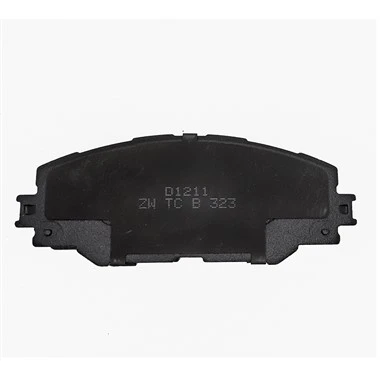
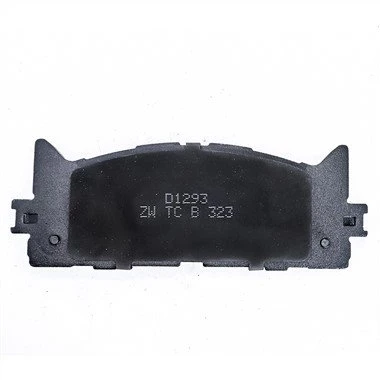
Characteristics And Service Life Of Brake Pads
Jun 09, 2021
The safe driving of vehicles such as driving tools requires not only people to drive, but also good brake accessories to assist them. A good brake pad may save people's lives in an emergency. Therefore, during the driving process of our vehicles, we must choose reliable quality and honest manufacturers to ensure people's driving safety. Next, we will tell you about the service life of brake pads.
Automobile brake pads are consumables, generally need to consider about 50,000 kilometers to replace. At present, the market mainly sells two kinds of brake pads, metal and ceramic.
Background screenshot.png
The metal brake pad technology is very mature, and the friction coefficient can be adjusted in a relatively large range. Therefore, many models with heavier weight still use metal formula brake pads when they leave the factory. But the disadvantage of the metal formula is that it will fall off. The main feature of ceramic brake pads is good noise control and no dust. The ceramic formula was developed and entered the market after about 2000. Nowadays, some Japanese and Korean cars are mainly supported by the original factory, because the car weight is relatively small, and the friction coefficient is not high. However, ceramic formulations also have disadvantages. The current friction coefficient of ceramic formulations is relatively low, but as the temperature increases, the friction coefficient can remain relatively stable.
However, the service life of brake pads cannot be defined by a specific number of kilometers, because the material of the brake pads is different, and everyone's driving habits are different, the road environment where they are often driven is also different, and the replacement time of the brake pads is also different. How do I know whether to replace the brake pads? The easy way is to look at the prompts on the dashboard. If the indicator light of the brake pads is always on, you need to replace the brake pads in time. In addition to observing the instrument panel, you can also observe the thickness of the brake pads. Usually the thickness of a new brake pad is about 1.5cm. If the thickness of the brake pads is less than 5mm, new brake pads should be considered.
In addition to the above judgment methods, we can also make predictions through hearing. The brake pads are mostly iron, especially after the rain is easy to rust. At this time, when you step on the brake, you will hear a hissing sound of friction, which is normal for a short time. Even some experienced drivers can judge the service life of the brake pads and whether they need to be replaced by perceptual effects. According to the degree of response of the brakes, the thickness and thinness of the brake pads will have a clear contrast in the braking effect, which can be experienced when braking. For our driving safety and human health, we must be careful when choosing brake pads, keep our eyes open, and choose good brake pads.