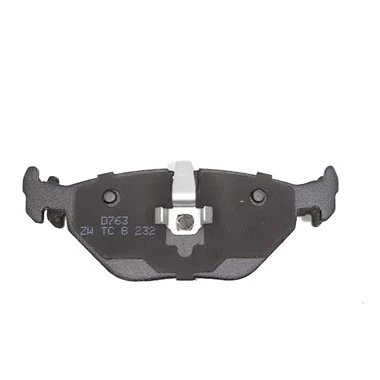
Friction Coefficient And Material Of Brake Pads
May 10, 2021
Brake pads are also called brake pads. The main function of the friction material is to create friction with the surface of the brake disc when the car is braking, so as to achieve braking force. Therefore, it deserves to be an important part of the brake pad structure.
Friction factor is a parameter of the friction performance of brake pads and an important indicator of brake pad quality. Applying a force to the horizontal plane to move a 100kg object, the force is equal to its own weight, that is, the coefficient of friction between this object and the ground is 1, then what is the coefficient of friction of the brake pads?
The friction coefficient of the brake pad is the friction coefficient of the brake pad, which has a higher friction coefficient. The greater the braking friction, the more sensitive the braking. The car can obtain a better braking effect by reducing the force of stepping on it. If the friction coefficient of the brake pads is too high or too low, it will affect the braking performance.
If the friction coefficient is too large, the brake will cause tire lock, or it will be too sensitive, and the comfort and heat resistance will be poor; if the friction coefficient is too low, the brake will fail, which is not good and will cause serious driving safety threaten. Under normal circumstances, the friction coefficient of the brake pads is 0.3-0.4.
Now let’s talk about the friction material of the brake pad:
Generally speaking, the friction materials of brake pads mainly include four aspects: basic materials, filler materials, abrasive enhancers and reinforcing fibers. The proportion of these materials in different products is different, depending on different uses and friction coefficients. In addition, the friction materials used in different grades of vehicles and disc brake pads are also different from drum brake pads. For brake pads, the formulation of friction materials is more important. The braking effect, wear resistance, temperature resistance and other properties of the brake pads will affect the relative proportions of the various components.
Currently, the common friction materials on the market can be divided into four types according to the basic materials. Asbestos, semi-metal, low-metal, NAO ceramic formula (ie non-asbestos organic matter). Next, let's take a look at the brake pads of different materials in detail.
1. Asbestos formula: For environmental protection, it has been banned.
2. Semi-metallic mixed material formula: "semi-metal" hybrid brake pads mainly use 30-50% of "iron alloy" as reinforcing fibers and combine them with important mixtures. Its advantages are better heat dissipation and better thermal attenuation performance. However, due to the relatively high hardness, noise is easily generated.
3. Low-metal hybrid brake pads: "low-metal" hybrid brake pads are mainly reinforced with iron and non-ferrous metals below 10%. It is characterized by moderate hardness, comfortable braking, high braking sensitivity and low braking noise
4. Ceramic formula: Ceramic formula is the current research and development direction of brake pad friction material formula. The asbestos materials developed earlier are mainly reinforced with glass fiber, aramid fiber and other fibers (carbon, ceramic, etc.). Moreover, the ceramic formula has good braking comfort, low braking noise, long life, cleaner and more environmentally friendly. However, due to the performance of the material itself, the braking force is relatively low, and it is generally used in Japanese and Korean models. Heavy-duty vehicles such as European and American vehicles should not use pure ceramic formulations.