The More Expensive The Brake Pads, The Better?
Jul 31, 2021
Brake pads are one of the more important safety components in automobiles, which play a role in determining the braking effect and ensuring driving safety. Due to the different formulas and processes of the brake pads, it will affect their prices.
Is it true that the more expensive the brake pads, the better? Let the editor speak slowly.
Brake pads-Zibo Zhongmin Automobile Safety Device Technology Development Co., Ltd.
Classification of brake pads:
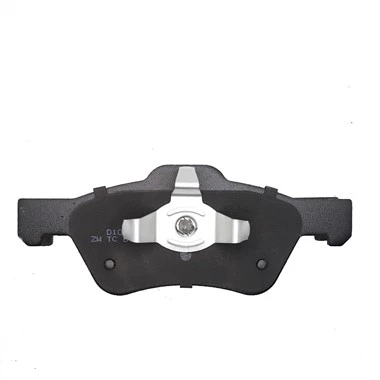
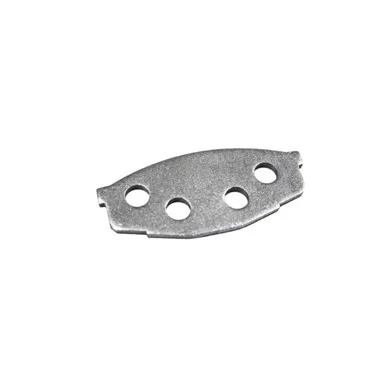
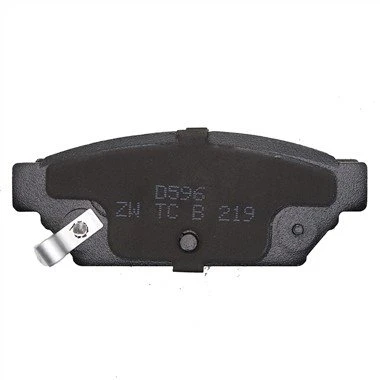
Brake pads are generally composed of a steel back, an adhesive thermal insulation layer and friction blocks. The friction blocks are squeezed onto the brake disc or drum during braking to generate friction, so that the vehicle decelerates and brakes.
Brake pads can be divided into different formulas: semi-metal brake pads, asbestos brake pads, low-metal brake pads, non-metallic NAO brake pads, NAO ceramic brake pads, etc.
. Asbestos formula brake pads have been basically eliminated.
. Various formulations have different emphasis on performance.
. A good formula is the guarantee for the good performance of the brake pads.
Each formula has different performance focus and is suitable for different car models.
Generally, large cars with metal formulas and SUVs of European and American large cars are designed with a preference for performance. The brake pad has a high friction coefficient, a large friction coefficient, and a high wear rate at high temperatures. Temperature resistance, wear resistance, high speed, better braking effect, large cars and European and American cars are more suitable for large cars and European and American cars.
If these models use higher-priced ceramic formula brake pads, the effect may not be very satisfactory.
However, the original films of Japanese cars are mainly made of ceramics, with a focus on comfort orientation. As the car body is lighter, the ceramic formula is relatively soft, quiet, less dusty, and the corresponding brake disc wear is relatively small.
If you use metal formula brake pads that are not suitable for your use, too much thrust may cause the car to overturn.
How to choose brake pads?
"Buy or not expensive"
The advantages and disadvantages of different formulations of brake pads are different, and there are several important indicators.
First is the coefficient of friction, which can be roughly divided into four categories.
HH (0.55~0.65), GG (0.45~0.55), FF (0.35~0.45), EE (0.25~0.35).
As the friction coefficient increases, the friction force increases, and the braking performance naturally increases.
Ordinary family cars use FF class, while improved cars use GG class, HH class will be more used for racing.
Ordinary family cars can basically withstand the brake pad coefficient of about 0.45, and will not cause too much damage to the brake disc. Each car must be determined according to the actual situation.
The friction is large and the foot feels more direct. However, blindly choosing brake pads with high friction can sometimes have a reaction, especially when using the original brake discs.
The friction coefficient of the brake pads is too high, which will cause the phenomenon of "disc eating", that is, the original brake discs cannot bear it, and a lot of extra wear will occur. Factory brake fluid may not be effective.
Another important indicator is the working temperature of the brake pads. The higher the friction coefficient, the easier it is to use on the track, and the higher the working temperature is usually.
For example, the operating temperature is between -25 and 420 degrees is the original brake pads, at least 50 degrees to start normal work is the competitive grade, and the higher temperature can reach 700 to 800 degrees, resistance to thermal attenuation Will also improve.
In other words, if it is only for daily use, replacing a set of competitive brake pads, the braking force will be weak before the temperature rises. If you live in the north, you should pay more attention. In winter, try to change a set of brakes with a slightly lower working temperature, which is safer.