What Are The Brake Pad Replacement Procedures And What Should Be Paid Attention To After Replacement?
Jul 06, 2021
The use of brake pads affects our daily driving safety. The corresponding brake pads must be replaced before the brake pads are worn, otherwise it will easily cause the braking force of the vehicle to decrease and driving safety will be hindered. After the self-inspection, go to the car repair shop How should it be replaced? What problems should be paid attention to after replacement?
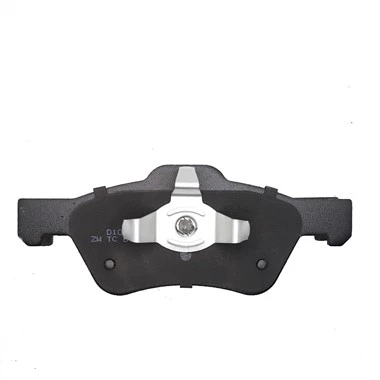
Brake pads require professionals to use professional tools to perform standard replacement. Therefore, we choose Michelin Chijia stores for replacement operations. First of all, the technician will use protective cloth to protect the body, and the steering wheel and seats in the car will also wear protective covers. The process standard is no different from 4S shops. Then the first step to replace the brake pads is to open the oil tank. Since the brake cylinder piston will be reset during the subsequent replacement process, the oil in the brake oil circuit will return to the top. If the brake oil of the vehicle is full, there will be It may cause overflow from the oil can. Therefore, it is necessary to open the lid of the oil can and put two pieces of absorbent paper on it to prevent the oil from overflowing and to prevent impurities from contaminating the brake fluid during the replacement of the brake pads. Then remove the tires to raise the vehicle, remove the front circlips, then remove the brake calipers, remove the old brake pads, after removing the brake pads, we need to temporarily place the brake calipers in a place to free up our hands. The following works. However, since the brake hose on the caliper has not been removed, attention should be paid to the placement of the caliper at this time. However, the Chijia technicians carefully hung the caliper on the shock-absorbing spring with a metal hook, which solved the placement problem in one fell swoop. Check the thickness of the old brake pads and clean the brake discs to avoid excessive irregular wear caused by the debris of the brake pads and brake discs. Then proceed to the installation of the brake pads. After installation, step on the brake pedal to reset the piston, and check the level of the brake oil pot to suck out the excess oil.
Please note that when replacing the brake pads, the degree of wear of the brake pads on the four wheels may be different. Some are severely worn, and some can be used continuously, but you cannot replace only the severely worn brake pads. Because if one brake pad in the front wheel is severely worn, it needs to be replaced, and the other brake pad in the front wheel must also be replaced together, otherwise it will cause uneven left and right braking forces and cause serious safety hazards. And if conditions permit, try to replace four brake pads at the same time, which is safer and is conducive to driving safety.
After replacing the brake pads, it is not all right. The newly replaced brake pads will feel blunt when in use, so it will take a certain time for the two pads to run in again. Moreover, the newly-changed brake pads will make a sharp "squeaking" sound when braking. This is mainly related to the use of synthetic metal in the friction part of the brake pads. It is a normal phenomenon that the friction between the brake pads and the brake disc contains larger metal particles. It will disappear after a period of time. Of course, sandpaper can also be used to quickly eliminate the abnormal noise. This is due to the lack of sufficient running-in between the brake disc and the disc, which is a normal phenomenon. At this time, we need to increase the driving distance during driving to avoid accidents.